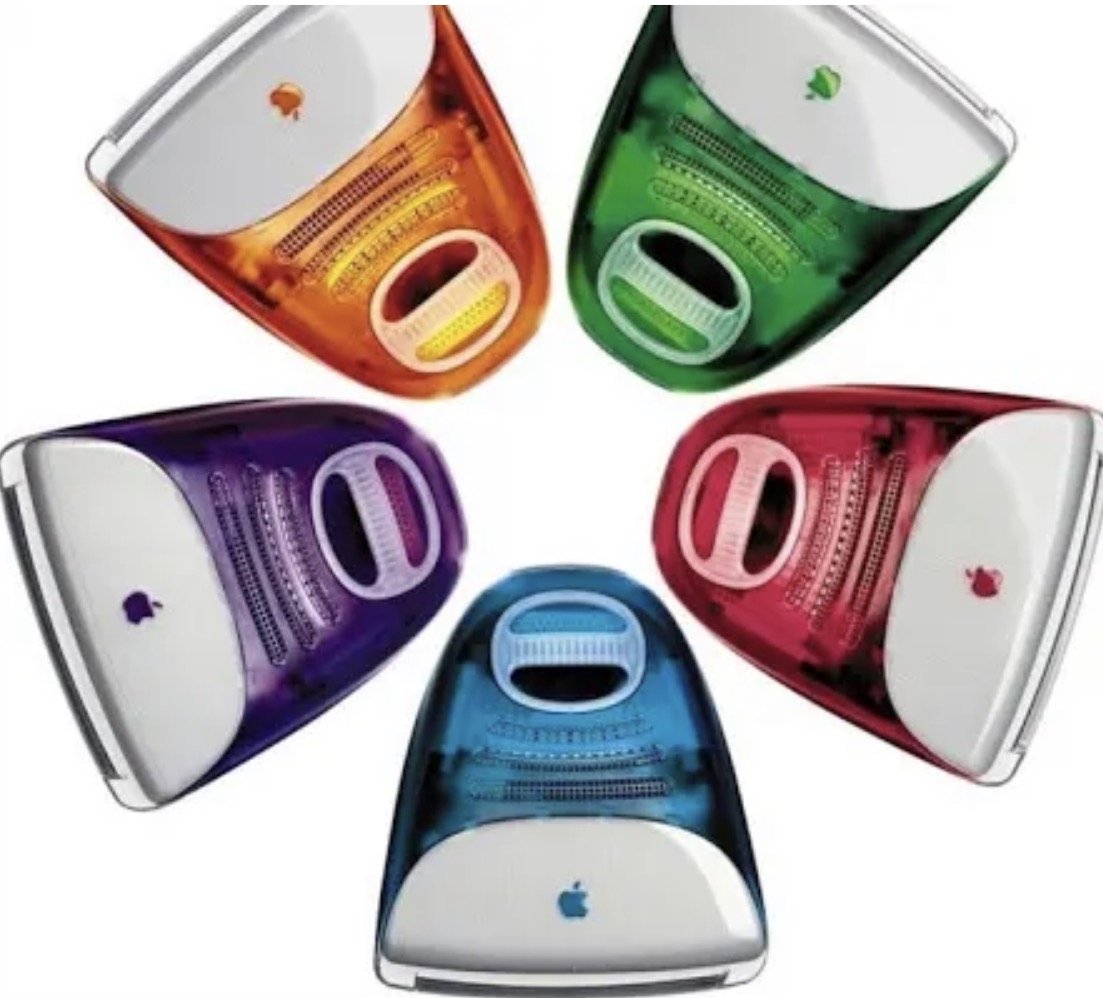
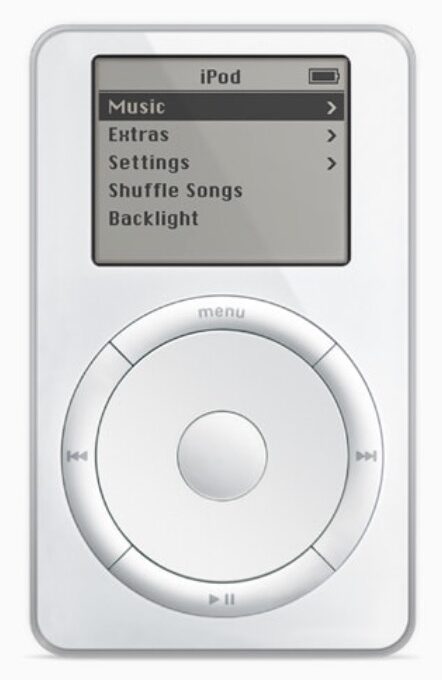
Apple Computer launched the revolutionary iPod in 2001 with this simple pitch: “1,000 songs in your pocket.” It cost $399. That’s around $725 in today’s dollars. The first portable MP3 media players were “retired” in 2022, but they’re making a resurgence among the younger generations who just want to experience nostalgia and a break from smartphones. As in, the joy of listening to music without being interrupted by notifications for emails, texts and dreaded phone calls. Call it a comeback driven by digital burnout. (Where are my corded headphones?) I’m also young enough to remember the original Apple iMac G3 from 1998. It was a groundbreaking, all-in-one computer that rescued Apple, which was struggling back then. It came in five distinct colors, a.k.a. “flavors.” The 15-inch CRT display had USB ports and a built-in CD-ROM drive – but no drive for those silly floppy disks. Welcome to the internet age.
You’ve got to love Apple founder Steve Jobs’ marketing style. The odd, egg-shaped plastic monitor was a translucent blue color with a handle and built-in stereo speakers. Crazy cool. I remember it cost me an arm and a leg ($1,299!), but I had to have it. Now, a vintage iMac just like mine – scratched, dented and dusty – goes for $225 on eBay.
Apple turns 50 on April 1. Not fooling. For real. At least I think so.
(Aside: On April 1, 1976, I was about a week shy of getting my first driver’s license. Fifty years have gone by since then. And I can still parallel park, thank you very much.)
Anyway, here’s the company’s new/old birthday advertising slogan: “50 Years of Thinking Different.” Hmm. Intentionally ungrammatical much, Apple? Guess it worked in 1997, so I’ll stop being critical.
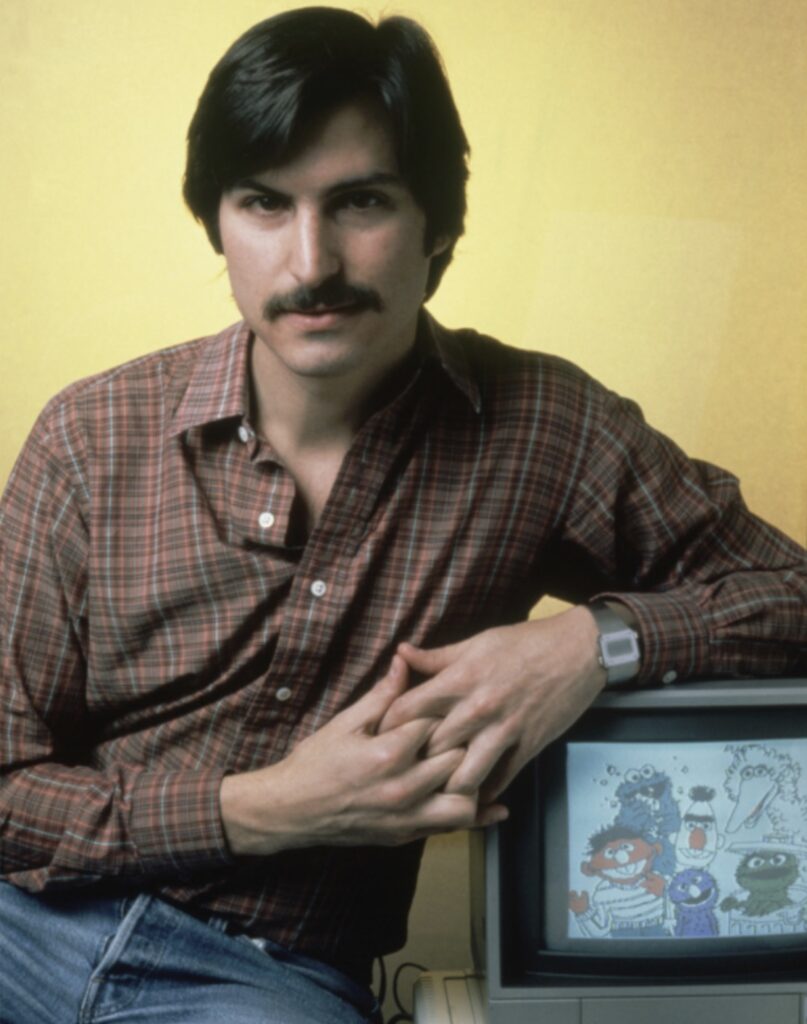
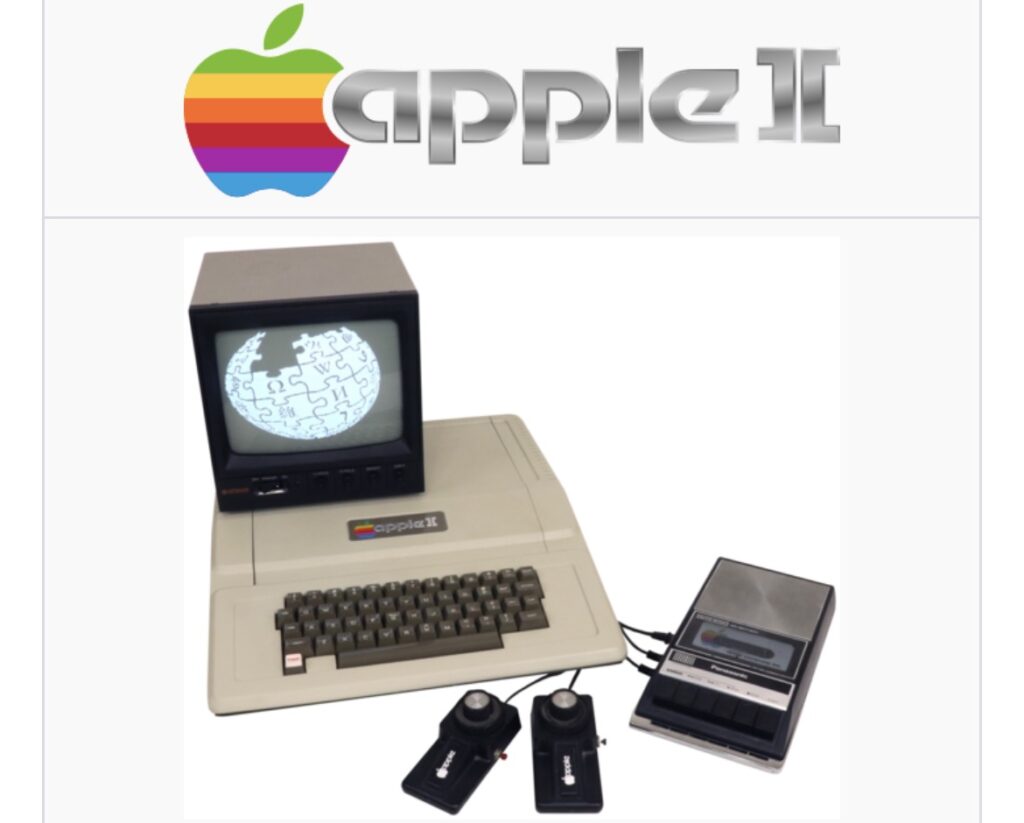
The first Apple computer went on sale in July 1976 with a list price of $666.66. (There’s that Jobs dark humor again. Or maybe it was co-founder Steve Wozniak’s idea. Rumor has it he liked repeating digits.) The Apple II, out in 1977, looked more like a computer and less like a motherboard in a briefcase.
Later, they produced sleeker-looking computers, such as the Apple Macintosh Plus in 1984. My first girlfriend had one, which made her the coolest person on the planet. Wish I’d kept it instead of the CDs.
And so it appears, as my mother used to say, that everything old is new again. Just wait a few years, and it will be back in style. Cars, clothes, computers, cash over credit.
For kicks, let’s add skyrocketing gas prices to the mix. How bad can a little nostalgia be for those of us lucky enough to be alive in 2026, a time when your phone is a computer and a camera?
Pretty bad, apparently.
In mid-January, Rebecca and I drove 1,200 miles to Florida and paid roughly $2.49 per gallon on average for regular unleaded gas. All the way from southeastern Michigan, through Ohio, West Virginia and the Carolinas. We took a more interesting route through Georgia toward the east coast of Florida along I-95, since our first stop was to visit our friend in Melbourne Beach. Lovely area, btw.
Total north to south gas bill: Cost us an arm, I’d say. Give or take. Our 2017 SUV does pretty well on the highway, particularly with “Maria Andretti” at the wheel. I mostly close my eyes and say the rosary.
Driving home in early March, on the other hand, was the flip side as gas prices had skyrocketed – up at least 50 cents a gallon. Total south to north gas bill: Cost us an arm, both legs and a car payment.
As “Late Night” host Seth Meyers observed last week: “You can lie about many things in American life, but the thing you can’t lie about is gas prices. Everyone sees it.”
No kidding.
According to Michigan AAA reports, the average price for regular unleaded gas here is $3.55 per gallon, up 72 cents from last month. It’s 51 cents higher than this time last year.
Here’s a closer look in case you’re good with numbers, unlike me: Analysts expect gas prices in many states to climb another 20 cents to 50 cents per gallon this week.
See what’s happening here? Everything old is not new again. It’s just old. We’re certainly not wishing for the good ol’ days when it comes to gas prices, are we?
In a matter of one week, consumers have seen gas prices surge after oil prices spiked following the U.S. strikes on Iran in February and supply disruptions from closure of the Strait of Hormuz.
As this administration’s Iran War escalates, analysts predict oil prices will top $100 a barrel. The last time oil traded above $100 a barrel was in March 2022 in the wake of Russia’s attack on … Ukraine. Four years and counting. Sigh.
“War. Huh, yeah. What is it good for? Absolutely nothing. Say it again, ya’ll.”
The highest oil price ever recorded was around $147.27 per barrel for West Texas Intermediate crude in July 2008, driven by peak oil fears, speculation and a weaker dollar.
“Right where we don’t want it,” as my new-favorite character Tommy Norris (played by actor Billy Bob Thornton) says on “Landman,” a series on Paramount+, a streaming service that I will never subscribe to because it was launched by those political pawns at CBS.
According to Billy Bob’s Tommy, who is a petroleum oil landman in Texas, the “sweet spot” for oil is around $78 a barrel. This price provides enough profit for exploration while keeping gas prices reasonable for consumers. But prices over $90-$100 a barrel are damaging to the economy and cause, or threaten to cause, widespread financial pain.
Pain inflicted on consumers. That’s us.
Right now, this Iran War has caused a surge in oil and gas prices, and sent global markets into convulsions – in fewer than two weeks’ time.
Think about that. Might want to maybe think different, if you get my drift.
Not to worry. It’s short term pain, they say, and will be over real soon.
But for now, the show must go on.
(YouTube video: On the day that Edwin Starr’s classic song “War” was released in June 1970, two Detroiters in their 20s were jailed for five years for ransacking a Chicago draft board office and burning its records. It was yet another example of the anger and rebellion that America’s prosecution of the Vietnam War was continuing to stir among the nation’s young people. At the time, Starr had no superstar reputation to put at risk when he cut the song. He welcomed the chance to put his own stamp on “War.” It became his signature song and would be performed by many other artists long after Vietnam was over. In 1999, Starr joined a young rock star named Bruce Springsteen on stage in the United Kingdom to perform “War.” Starr died in 2003 at age 61.).