The other day when the skies were clear and the sun was shining, I was working in the yard – a.k.a., my bonus therapy sessions in spring, summer and fall. No payment required. I don’t wear ear buds or headphones, so I tend to get lost in thought while pulling monstrous dandelions and those ubiquitous purple and green ground coverings that have taken over our lawn and inhabit every sidewalk crack. In my weeded bliss, a thought having nothing to do with anything occurred to me: I am among the only generation to have experienced an entirely analog childhood and a fully digital adulthood. Let that sink in for a minute. If you count the late 1970s as when consumers first began purchasing personal computers – even though they had floppy disk drives, 5-inch displays and resembled my mother’s sewing machine – regular people could buy a computer. But back then, these revolutionary releases were more luggable than lovable. During my fledgling days as a reporter covering high school football and council meetings, I used a TRS-80 to type and file my stories. Some of my retired colleagues may recall that for many of us, TRS-80 stood for “Trash-80,” and not Tandy Radio Shack.
In these troubled times when I truly fear life’s snow globe is all shook up in a perpetual blizzard with AI and technology reshaping the world around us, I take comfort riding the occasional nostalgic wave. And we always buy a new spiral-bound monthly calendar.
There are worse things than obsessing about the good old days. Aren’t there?
Rotary telephones. Party lines where neighbors could listen in on conversations. (OK, I actually do not remember those, but I’ve heard Rebecca and my sisters talk about them.) And, my favorite, handwritten letters.
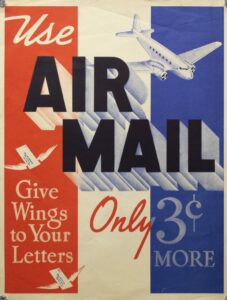
We learned patience, sometimes waiting days or even weeks for letters to arrive in the mail, which wasn’t distinguished as “snail mail” since there was only one kind of mail. Other than “Air Mail,” of course, which was written in all caps on flimsy, red-and-blue bordered envelopes. Like a Western Union telegram but slower and minus singing. Par Avion!
Even though it’s 2026, I’d choose a handwritten note over an AI-written response any day of the week. Maybe it’s because I’m a writer or because using artificial intelligence doesn’t seem all that smart to me.
I’ve shared written correspondence with friends and family members since I was a child. I was taught to write thank-you notes after receiving gifts. Always, always. The lesson was carried over into adulthood for things such as dinners, parties and just because. It’s what was done.
I’m pleased that my nieces/nephews have taught their kids to do the same. It’s a genuine thrill to open the mailbox and see our names and address scrawled on an envelope knowing it was likely created by a child using a No. 2 pencil. Warms my heart.
For me, I loved writing letters to aging aunts and uncles over the years. They appreciated the personal touch and not having to read it online, which they wouldn’t do anyway. They’re all gone now, so I’ll have to pick up the slack and write to my aging friends and family members, I guess.
Last year, the charm of handwritten notes and a letter-writing revival was sparked by Virginia Evans’ book “The Correspondent.” Known as an epistolary novel because it is written as a series of letters between the fictional characters of a narrative, the book became a sleeper hit, resonating with so many people, including me.
The 73-year-old main character, Sybil Antwerp, is a Maryland-based retired lawyer who exchanges letters with everyone from an ancestry company employee to her adopted brother in Europe to famous novelist Joan Didion.
Through those correspondences, we learn about Antwerp’s experiences with aging, grief and a long career in law — and the major secrets she’s kept along the way. I won’t spoil it, but the novel ends with a poignant yet somewhat abrupt reflection on life, loss and the limits of communication.
It’s something we all struggle with at one time or another. The novel’s letters reminded me about why the act of writing itself matters, not just the sentiment behind it. It made me think about the importance of forgiveness, particularly later in life, because finding peace after you’ve been wronged isn’t easy.
(Aside: You may recall Didion’s acclaimed 2005 memoir about grief, love and loss called “The Year of Magical Thinking.” She had some strange writing rituals herself, including putting her typed manuscript in a plastic bag and storing it in the freezer when she encountered writer’s block.)
I may have to try that.
Rebecca: “What’s for dinner tonight, hon?”
Me: “I got nothing. Absolutely nothing.”
Back to writing those thank-you notes. As I recall, the most memorable response I have ever received about one went something like this: “If you’re still sending thank-yous, your mother must have raised you right.”
She sure did.
Happy Mother’s Day, Mom. Miss you much.
(YouTube video: From 1978, here is two-time Grammy Award winner Gloria Gaynor singing “I Will Survive,” which was my mother’s favorite song. A strong woman who loved this anthem for empowerment, Elia John was indeed a survivor. And so is Gaynor, who turns 83 in September.)




13 Comments
Martha Miller
My thank you for this post is in the mail.
Corky O’Reilly
Here I am on this beautiful Sunday morning wondering what the day will bring never thinking that tears would flow not in sadness but with gratitude and joy. As usual, dear sis, you’ve hit the nail on the head reminding us of lessons taught long ago by our dear Mom that were sometimes ignored but have become part of our DNA. Some things just take a little time to be fully appreciated and understood, and many of us have said at one time or another, “I sound just like Mom” as a negative. Not anymore and not for a very long time. Now I smile, say thank you, Mom, and feel incredibly blessed. Thank you, Mom.
Jennifer John
Gratitude and joy. Thanks, sis.
Elaine R
Awww, Jen. I just loved this! So very touching and heartfelt that it brought tears to my eyes. I thank my “Nan” every day for the values she taught me about handwritten letters and especially the thank-you notes. I am trying to pass these lessons on to my two grandsons. Wishing you a happy day. We miss you two! Love and hugs.
Jennifer John
You’re a good Nan, too. Thanks, E.
Laurette Alkidas
Loved your blog today, Jen. I have read “The Correspondent” and enjoyed it a great deal. I do send letters to my “grands” because nothing beats a real letter. Write on, Super Scribe!
Jennifer John
I love that you call me that! Thanks, LA.
Kori Blessing
I will be watching my mailbox for a letter from my dear cousin. Miss you!
Jennifer John
OK. I think you’re old enough now. Hah!
Kathie Grevemeyer
Back home at my condo after having a lovely day with my Michigan children and Michigan grandchildren at my daughter’s home for a get-together. So nice. No lines, no packed restaurant, etc. Just a time of catching up on who is doing what, phones were not at the dinner table, sun was shining and all was well with us. My son, David, who was born on this weekend 56 years ago, stood in for his sister’s husband, who was at his mother’s home because she’s homebound after surgery and couldn’t join us. David grilled the steaks, and my grandson helped. We missed them not being with us, but Susan did not want to cancel. In this busy time of life, getting together is such a treat and feels so good.
Finding your blog, which I always enjoy so much, was the cherry on top of the sundae.
Jennifer John
Sounds like a pretty wonderful Mother’s Day — cherry on top and all! Thanks, KG.
Judy H
I miss not getting letters. But I don’t miss writing them. As I have aged, my handwriting has not. It looks like I am in the fifth grade! I loved this post for so many reasons: the lessons we learn from good books, the many lessons we learned from our mothers and the lessons we learn from our own life.
Jennifer John
Great to hear from you! I’m gonna write you a letter. Thanks, JH.